Two photographs of the same car. One of them could be in your claims queue today.
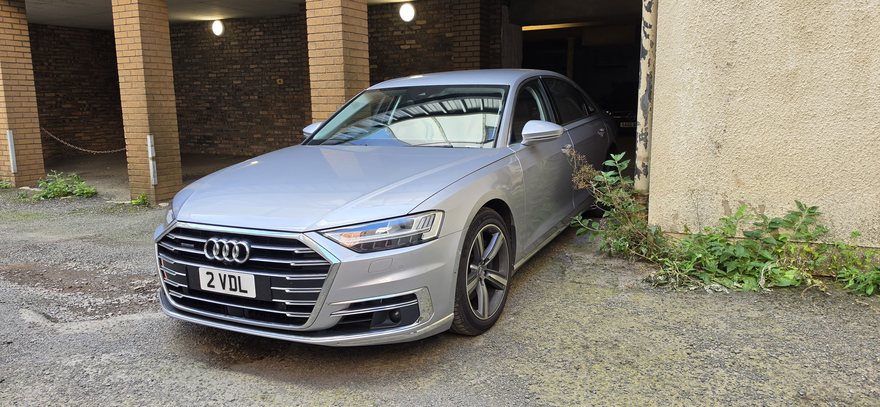
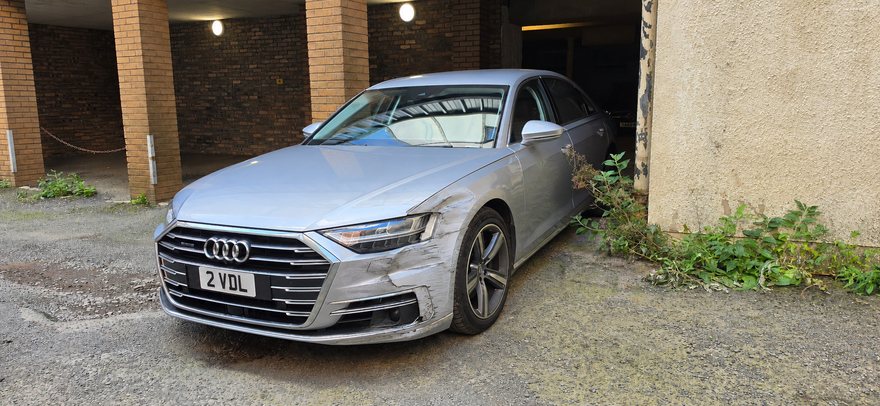
Nothing in either file would tell your claims handlers which is which.
If instead your customers took their photographs and video through the Custodian app, every image would be sealed at the instant it was captured. Your handlers would know in seconds when it was taken, on which device, by a verified person, and that not one pixel has changed since. The fabricated photograph could not be sealed at all, and would announce itself. A working demonstration is ready for you to try.
Custodian. The independent witness for digital evidence.
Custodian was founded in Glasgow by Attiq Rahman, a restorative dentist of thirty years' standing, to answer one question: how do you prove that a photograph or video has not been digitally altered in any way since the instant it was taken?
It uses mathematics to create a unique fingerprint of a photograph or video at the instant it is captured, and applies a seal. Any alteration whatsoever breaks the seal. A claims handler can prove in seconds whether the photograph in front of them has been touched, who took it, on which device, and when. Custodian never sees the image. Mathematics does the work.
Change one pixel. Watch the seal break.
This is a real fingerprint of a real photograph, computed in your browser. Click anywhere on the picture to alter a single pixel. You will not be able to see the change. The seal will.
calculatingcalculatingIn the industry's own words
Fraudsters are using these tools to fabricate accident scenes and damage imagery to support false or exaggerated claims.
Aviva, 8 June 2026, reporting £233 million of claims fraud detected across more than 18,400 suspect claims in 2025. Source
The same damaged car edited with a different number plate to claim twice. A designer watch made to look damaged using an AI filter.
Admiral, 7 April 2026, among the examples given alongside £86.8 million of fraud detected in 2025, up 71 per cent on 2024. Source
Cases where apps were used to distort real-life images, videos and documents increased by 300% from 2022 and into 2023, and has all the signs of becoming the latest big scam to hit the insurance industry.
Allianz UK, 23 April 2024. Source
£1.16 billion of fraudulent claims detected in 2024, across 98,400 claims. Motor accounted for 51,700 of them, worth £576 million.
Association of British Insurers, 17 November 2025. Source
What the industry detects is the part it can see. Detection after the event will always be a race. Custodian removes the race: the evidence proves itself before it is sent.
How a Custodian seal is made
- Verify
The person taking the photograph proves who they are with their phone's own fingerprint or face recognition. No biometric data ever leaves the phone; only the fact that verification happened.
- Capture
The photograph or video is taken inside the Custodian app, within a short window of that verification, so the person who verified is the person who pressed the button.
- Seal
Within milliseconds a fingerprint of the image is taken and bound to a one-time value that did not exist before the session opened. It is signed in hardware security modules and timestamped by independent authorities. The image itself never leaves the phone.
- Verify anywhere
Anyone holding the sealed file can check it, free, without an account. If a single pixel has changed, the seal fails, and the failure is as plain as a broken wax seal on a letter.
What the seal proves, what it does not, and what it will not stop
It proves
- A verified person pressed the button.
- A known, unmodified device took the picture.
- It happened at a live, independently timestamped moment.
- Not one pixel has changed since that moment.
It does not claim
- What was in front of the lens, or why.
- Anything about the image before the seal was applied.
- Anything at all about the content. Custodian never sees it.
What it will not stop
- A staged incident, photographed faithfully.
- A genuine photograph of damage to a car that is not the claimant's, or of damage that predates the policy.
- Exaggeration in the story told around a truthful image.
- A claimant who declines to seal at all.
The seal does not catch the fraud in those cases, and we will not tell you it does. What it removes is the fraudster's cheapest tool, the edited or generated image, and it tells your handlers which photographs they no longer need to argue about. On the last point, sealing changes what an unsealed photograph means. Today an unsealed image is normal. Once your customers seal as a matter of course, an unsealed image becomes a question your handlers ask and the claimant has to answer.
A seal that claims less, and can be checked by anyone, is worth more in front of a claims handler, a regulator or a court than one that claims everything and asks to be trusted.
How it fits your claims journey
The Custodian app
Built, and ready for testing today. For a pilot nothing is integrated: your handlers direct a defined group of claimants to the app, and verify the seals they receive in a browser.
Inside your own app
The sealing service behind the app is separate from the app itself, so the same seal can be applied from within an insurer's own claims journey. Timing depends on your development schedule, not ours.
How it differs from what you may already have seen
Content Credentials, the C2PA standard now shipping in some cameras and phones, record where a file came from and which tools touched it. They are a provenance record for publishing, signed by the device or software maker. Capture-verification services, of which Truepic is the best known, confirm that a photograph was taken through their software, and generally pass the image through their own servers to do so. Custodian was built for a narrower question, whether a piece of evidence has been touched since a verified person captured it, and answers it differently.
| Content Credentials (C2PA) | Capture-verification services | Custodian | |
|---|---|---|---|
| Who sees the image | Nobody beyond the device. The record travels inside the file. | Usually the service, which receives the image to verify it. | Nobody. Custodian never receives the image. |
| Who took it | The device or software, not the person. | Varies by service. | A verified person, within a short window of verifying. |
| When it was taken | The device clock, as the device records it. | The service's timestamp. | Independent timestamp authorities, anchored publicly. |
| Hardware needed | A camera or phone that ships with support. | The phone you have. | The phone you have. |
| Checking it | Public tools, where the record survives. | Through the service. | Free, in a browser, without an account. |
| Built for | Publishing and media provenance. | Verified capture. | Evidence: claims, records, anything that may be challenged later. |
Descriptions of other systems are drawn from their public documentation and given in good faith. If we have something wrong, tell us and we will correct it.
Security and assurance
FingerprintSHA-256 of the captured file, computed on the phone.
SignatureHybrid classical and post-quantum (ML-DSA), applied in hardware security modules.
TimestampsRFC 3161, from independent timestamp authorities, with public anchoring.
KeysHeld in hardware security modules. AWS CloudHSM during development; dedicated hardware modules at go-live.
BiometricsVerification uses the phone's own mechanism. Custodian receives a pass or a fail, never biometric data.
ImagesNever received, stored or seen by Custodian.
Data residencyData for UK customers is held in the United Kingdom.
TestingIndependent penetration testing is under way.
EngineeringBuilt by EC2 Consulting to a published architecture, under the founder's direction.
VerificationFree, in a browser, without an account, by anyone holding the sealed file.
The first pilot is open.
Ninety days. One claims team. A defined group of claimants asked to photograph through the Custodian app. Nothing integrated, and nothing procured beyond the pilot agreement itself.
Three measures, agreed in writing before the first claim: time to settle sealed claims against the team's baseline, disputes over images on sealed claims, and referrals to your counter-fraud team from the pilot cohort. At the end you receive the figures and a written report, whatever they show.
There is no charge for the pilot.
What you do
- Nominate a team and a cohort.
- Ask those claimants to photograph through the app.
- Have handlers verify seals in the browser.
What Custodian does
- Provides the app and the verifier.
- Gives you one named contact who answers the same day.
- Sends weekly figures and a closing report.
The people and the company
Attiq Rahman, founder. A restorative dentist in Glasgow for thirty years, who began building Custodian when his own teaching material was being copied and sold, and found that the answer to that small problem was an answer to a much larger one. He answers every message himself.
EC2 Consulting, engineering partner. A specialist team building the platform to the published architecture. The app is in testing now; the production platform, with dedicated hardware security modules, follows.
Custodian Integrity Ltd is the UK operating company. Registered in Scotland, company number SC885388, incorporated 7 April 2026. Registered office: Drumcavel Lodge, Drumcavel Road, Glasgow G69 8HQ.
Custodian Technologies FZCO, Dubai, is the group holding company. UK customers contract with the UK company, and their data stays in the UK.
Twenty minutes is all we ask.
Enough to see a sealed photograph verified on a real claim image, and to hear where it would and would not help your team. If it is of no use to you, we will say so ourselves.
Email attiq.rahman@custodiantechnologies.com
Mobile +44 7889 473312
Both reach Attiq Rahman directly. Or use the form, and he will reply the same day.